
When we think of alcohol-free beer today, we often focus on health trends, fitness-conscious consumers, and refined brewing techniques.
But the story of alcohol-free beer reaches much further back—right into the heart of Cold War Europe.
Among the most intriguing chapters in non-alcoholic beer history is the tale of Aubi, the East German “motorist’s beer.”
This not only served a practical purpose in the German Democratic Republic (GDR) but also pioneered alcohol-free brewing under extreme restrictions. Let’s dive into the fascinating origin, production, and legacy of this forgotten East German creation.
What Was East Germany’s Motorist’s Beer?
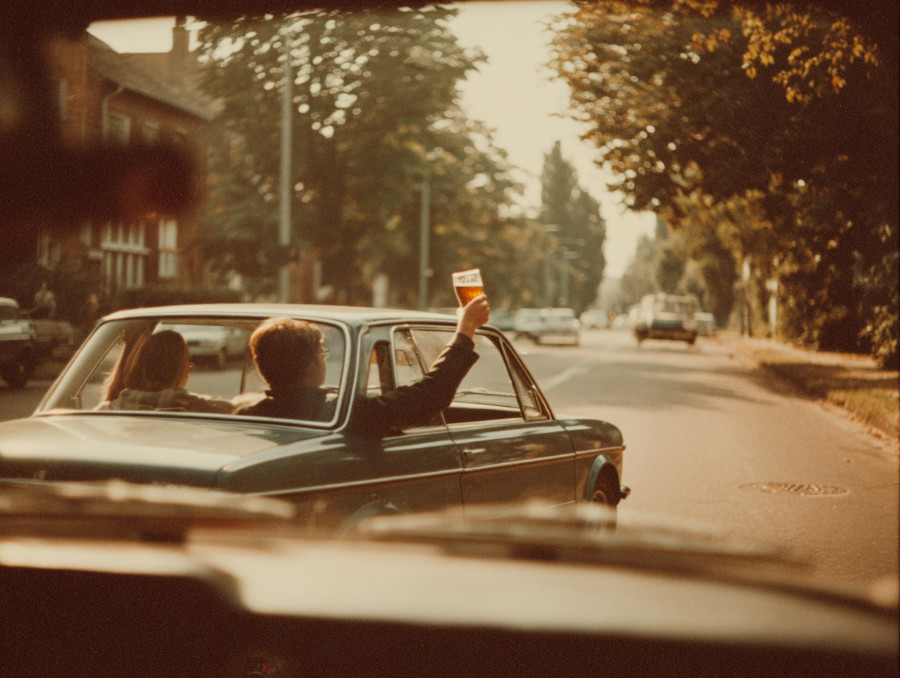
Known officially as Aubi (short for Autofahrerbier, meaning motorist’s beer), this alcohol-free lager was developed in the 1970s in the GDR. It was the only alcohol-free beer officially sanctioned under TGL 7764, East Germany’s beer industry standards. The idea? Provide a safe option for drivers in a country where 0.0% blood alcohol content was mandated for motorists since 1956.
But Aubi didn’t just serve motorists. It found unexpected popularity among industrial workers in steel mills and glassworks—workers who craved beer during long, hot shifts but were banned from consuming alcohol on the job.
Brewing Under Socialism: Innovation Through Necessity
The development of Aubi was spearheaded by Ulrich Wappler, brewmaster at VEB Engelhardt in East Berlin. After acquiring unused fermentation tanks from a shuttered brewery, Wappler found himself with spare capacity—and a challenge from higher-ups to create an alcohol-free beer.
But without access to Western brewing literature or modern equipment, creating such a product was no easy task.
Wappler reportedly studied smuggled Western patents for six months before designing a process for biological alcohol removal through restricted fermentation.
Brewing Method
The brewing process for East German motorist’s beer was remarkably innovative:
-
Grist Composition: Included up to 50% unmalted adjuncts.
-
Special Decoction Mash: Carefully avoided beta-amylase activation to minimize fermentable sugars, favoring alpha-amylase activity.
-
Restricted Fermentation: Fermentation was quickly halted by chilling the beer after only a brief start, keeping alcohol levels below 0.5% ABV.
Despite being energy-intensive, this method worked—and the result was a drinkable, affordable, and fully GDR-compliant non-alcoholic beer.
From Factory Floors to Foreign Markets
While created for motorists, Aubi found its true market among factory workers in heavy industry. Glassblowers and steelworkers believed beer helped with salivation during intense shifts, and when unions banned alcoholic beverages, Aubi offered a safe and satisfying alternative.
Its popularity even extended beyond East Germany. Exported as “Foxy Light” in the U.S. and “Berolina” in the U.K., this East German motorist’s beer gained modest recognition abroad. A 1988 Chicago Tribune taste test ranked Foxy Light favorably among American non-alcoholic beers, especially for its price.
The End of the Road
The fall of the Berlin Wall also meant the end for many East German products, including Aubi. After German reunification, most GDR breweries were deemed outdated and shut down. Aubi ceased production, and its history faded into obscurity.
However, brewmaster Ulrich Wappler remained active in the industry, helping train brewers and consult on brewing systems in West Berlin until his retirement.
Now, Germany leads the world in non-alcoholic beer consumption by volume.
Legacy of the East German Motorist’s Beer
Aubi may be gone, but its legacy lives on in today’s craft and non-alcoholic beer scenes.
It’s a powerful reminder that innovation often comes from constraint, and that even under political isolation, passion for beer can drive ingenuity.
For fans of non-alcoholic beer, the story of East German motorist’s beer is more than just historical trivia—it’s a testament to creative brewing and the enduring appeal of beer, no matter the ABV.