THC-infused non-alcoholic beer is emerging as a distinct crossover category that blends cannabis beverages with established brewing formats, positioning itself at the intersection of alcohol alternatives, functional drinks, and regulated THC products.
As non-alcoholic beer continues to normalize in social and retail settings, THC-infused variants reflect a broader shift toward mood-modulating beverages that preserve familiar beer rituals while removing alcohol from the equation.
What THC-Infused Non-Alcoholic Beer Is
THC-infused non-alcoholic beers combine alcohol-free beer bases with measured doses of tetrahydrocannabinol, typically delivered through emulsified cannabis extracts.
These products contain little to no alcohol and rely on cannabis rather than ethanol to deliver psychoactive effects. Dosing is generally restrained, most often ranging from 2 to 10 milligrams of THC per serving, aligning with state-level cannabis regulations.
From a flavor perspective, producers aim to retain recognizable beer cues such as malt structure, hop aroma, and carbonation while minimizing overt cannabis flavors.
The resulting products are positioned as social beverages designed to replace one or two beers, rather than as edible-style cannabis products.
Why the Category Is Emerging Now
The growth of THC-infused non-alcoholic beer reflects the convergence of two trends. Non-alcoholic beer has moved decisively into the mainstream, driven by moderation, wellness, and lifestyle shifts.
At the same time, cannabis beverages are gaining traction as alternatives to smoking and traditional edibles, offering faster onset and more predictable dosing.
For consumers reducing or eliminating alcohol, THC-infused non-alcoholic beer maintains the format and pacing of beer drinking while delivering a different type of effect. This combination has proven particularly appealing in markets where cannabis beverages are positioned as sessionable, everyday products rather than novelty items.
Float House and the Sessionable Cannabis Beer Model
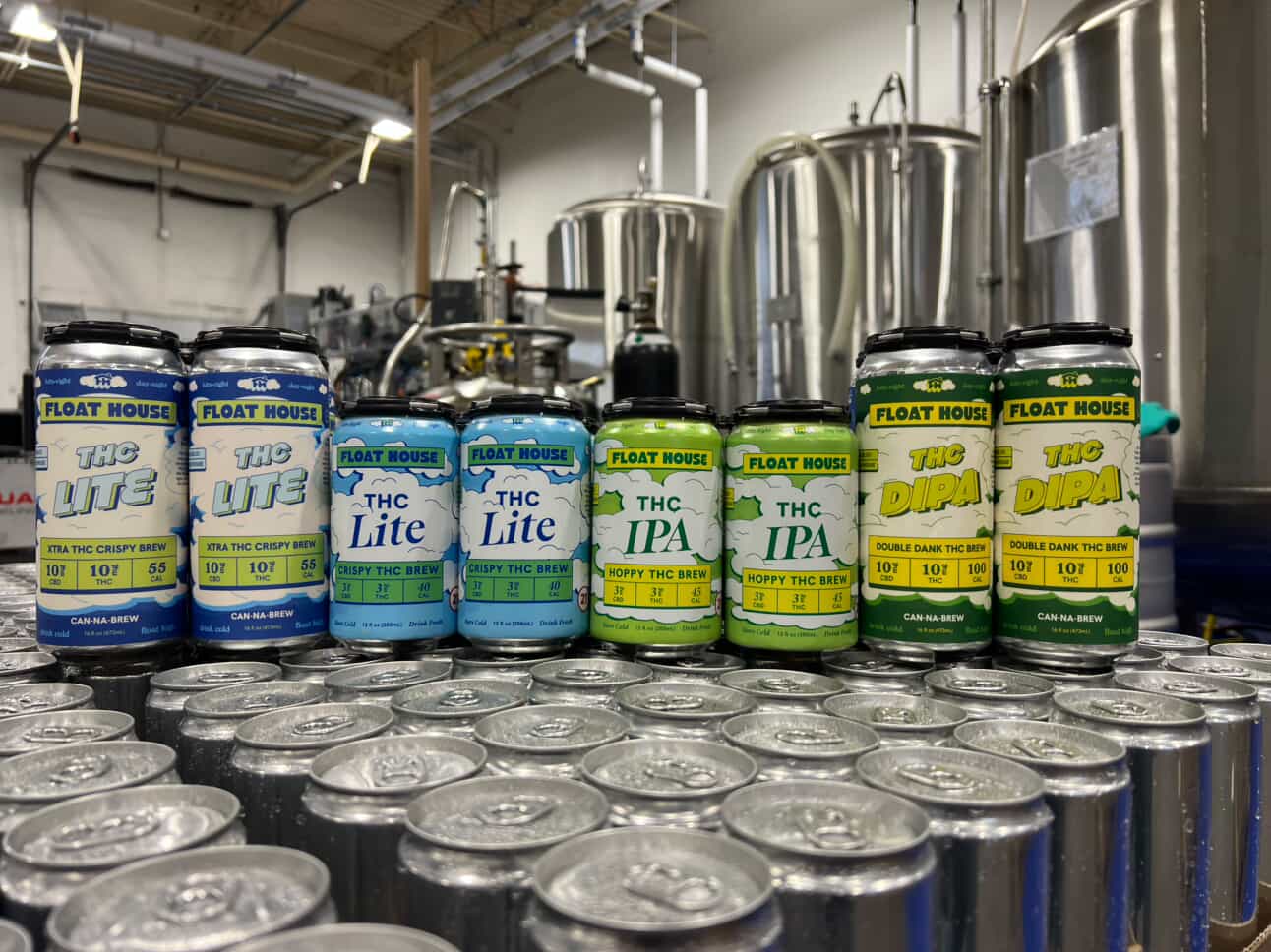
Connecticut’s Float House has emerged as one of the clearest examples of THC-infused non-alcoholic beer built around traditional beer sensibilities. The brand focuses on low-dose cannabinoid formulations, clean ingredient lists, and beer-forward flavor profiles that closely resemble craft styles.
One of its core offerings is the Float House THC IPA, a hop-driven, citrus-forward IPA-style beverage containing 3 mg THC and 3 mg CBD per can in a balanced 1:1 ratio. The beer is non-alcoholic, low in calories, and formulated to deliver a relatively quick onset while preserving the bitterness and aroma associated with modern IPAs.
Float House, run by entreprenuer Gordon Whelpley, also produces THC Lite, a lighter lager-style option designed to mirror classic light beers, and a recently released THC Nitro Stout.
The Lite emphasizes refreshment and drinkability, reinforcing the brand’s focus on sessionability rather than high-dose consumption, while the Stout steers the THC-infused non-alcoholic beer scene into maltier territory.
“I love beer and beer culture, but that enjoyment started to cost me more than I was willing to pay,” Whelpley said. “Float House is my way of keeping the ritual and growing the culture without the wreckage.”
Easy Man and Familiar Lager-Style Cues
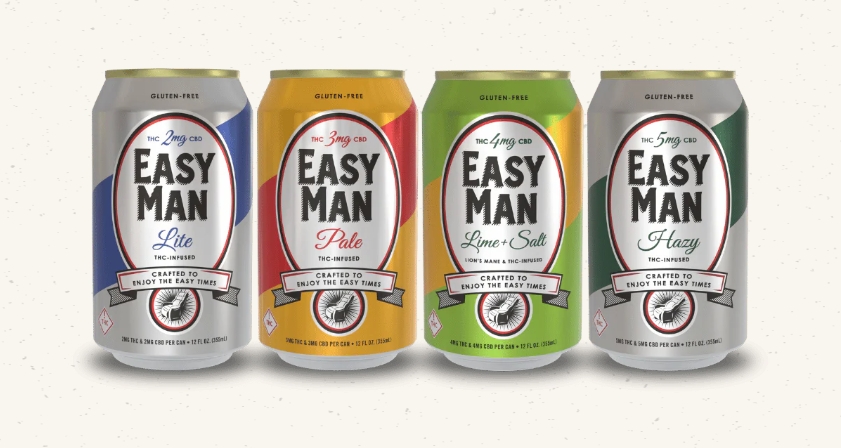
Chicago’s Easy Man positions itself around approachability and everyday use, leaning into familiar beer styles and microdosed cannabinoid levels. The brand is built on the idea that cannabis beverages can function as casual beer replacements rather than specialized products.
The lineup includes approachable pale and hazy-style offerings, typically formulated with approximately 3 to 5 mg of THC paired with an equal amount of CBD.
Flavor profiles skew toward light malt character and restrained bitterness, reinforcing their connection to standard beer formats.
Easy Man, a line built on top of the well-known non-alcoholic beer brand Go Brewing, also offers a Lite-style SKU with lower cannabinoid levels and a crisp, clean finish. Across the portfolio, dosing consistency and predictable effects are central to the brand’s appeal.
Comma and the Functional NA THC Beer Approach
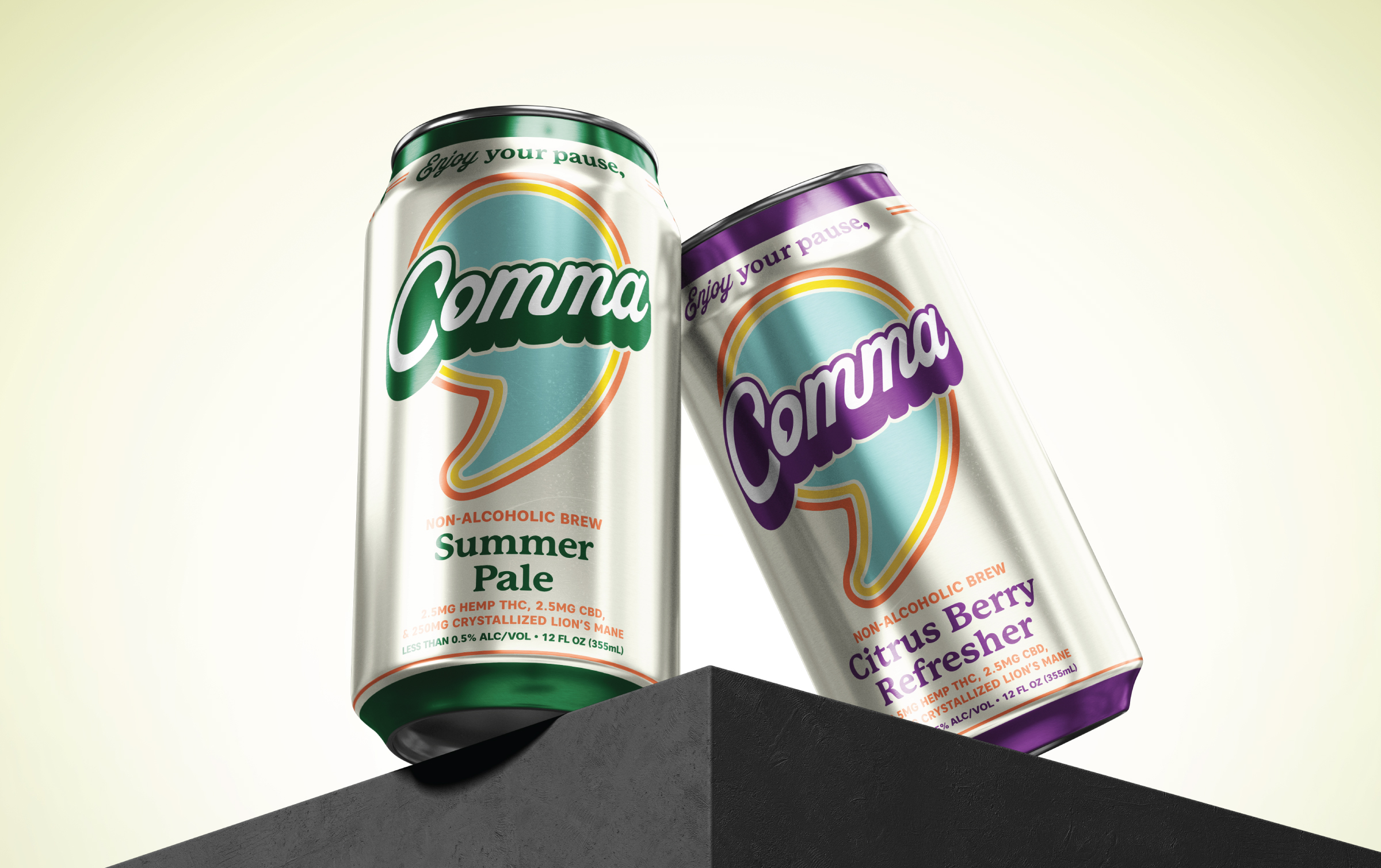
Colorado’s Comma represents a more design-forward and functional interpretation of THC-infused non-alcoholic beer. While still rooted in beer structure and carbonation, the brand incorporates additional functional ingredients alongside cannabinoids.
Its flagship Comma Summer Pale Ale contains 2.5 mg THC and 2.5 mg CBD, paired with 250 mg of Lion’s Mane mushroom. The pale ale profile emphasizes citrus and light bitterness, while the functional ingredient stack is positioned around focus, balance, and clarity rather than intoxication.
Comma also offers fruit-forward alternatives built on the same low-dose THC, CBD, and Lion’s Mane foundation, further aligning the brand with the broader functional and non-alcoholic beverage space.
Regulatory Fragmentation Shapes the Market
Unlike conventional non-alcoholic beer, THC-infused versions are regulated under cannabis law rather than alcohol statutes. Products are typically sold through licensed dispensaries, and interstate distribution remains prohibited under federal law.
This fragmented regulatory environment limits scale and encourages regional production, often through partnerships between beverage producers and licensed cannabis manufacturers.
Differences in state-level dosage limits, labeling rules, and packaging standards directly influence formulation and branding.
Consumer Use Cases and Occasions
THC-infused non-alcoholic beers are most often consumed in casual social settings, at home, or during activities where alcohol was previously the default.
Controlled dosing and faster onset compared to traditional edibles make them suitable as one-for-one beer replacements rather than extended consumption products.
Brands such as Float House, Easy Man, and Comma illustrate how the category is being framed around pacing, moderation, and familiarity rather than maximum potency.
Outlook for the Category
The long-term growth of THC-infused non-alcoholic beer will depend heavily on regulatory evolution and expanded retail access. Even under current constraints, the category is influencing how beverage companies think about alcohol alternatives.
As beer becomes increasingly defined by format rather than alcohol content, THC-infused non-alcoholic beer represents a meaningful step in the ongoing decoupling of beer from ethanol as its primary driver of experience.